
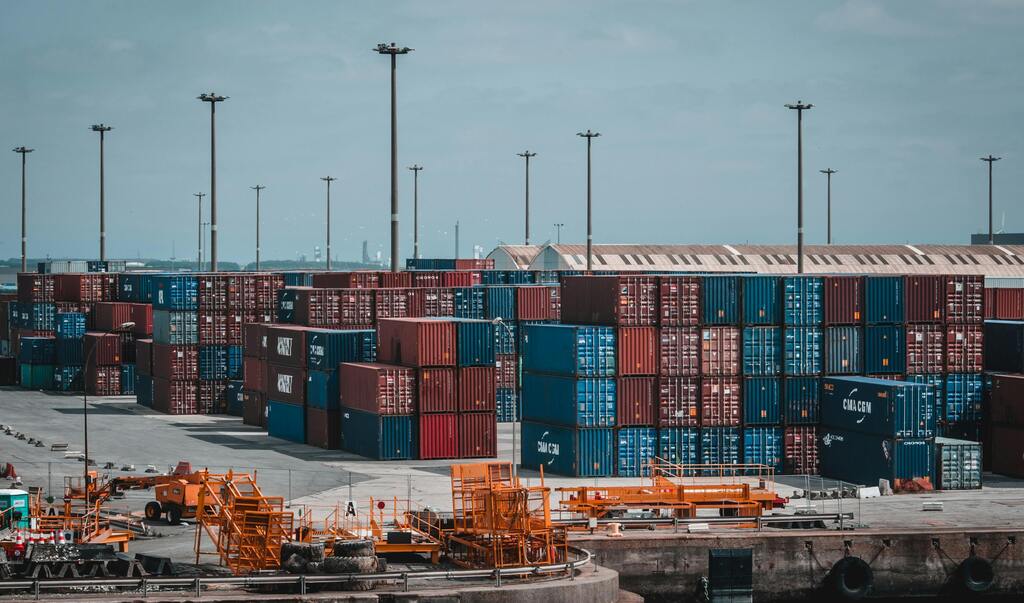
Logistics in Southern Africa is not for the faint-hearted. Every day, logistics operators navigate a landscape where cargo hijackings, armed robberies, theft, fraud, corruption and an array of other crimes are part of the operational reality.
Criminal networks that operate in the region move with increasing precision, often with the benefit of insider collusion, exploiting gaps in the defences of logistics operations. They also evolve faster than most companies can react, actively adapting to security measures and constantly testing new methods to infiltrate supply chains.
The evidence lies in the alarmingly high frequency of successful crimes occurring each week.
For businesses that store and move high-value goods, the risks extend far beyond financial losses - they threaten operational continuity, reputation, and even long-term viability.
Surprisingly, even with the advent of modern control towers, many logistics companies still take a mostly reactive approach to the securing of their operations instead of treating it is a central part of their....

There’s something reassuring about living in a residential estate. For many, it’s about peace of mind - knowing your children can cycle in the streets, your pets are safe in your garden, and your home is protected whether you're out for an hour or gone on holiday. But the illusion of safety can be just as dangerous as the absence of it. Gates, guards, and a few cameras are not enough to guarantee security. Residential estate security is about designing a living, evolving system that integrates people, procedures, and technology into a seamless ecosystem. And that requires more thought than most people realise.
Let’s explore what it truly takes to secure a residential estate - from the design of its perimeter and the sophistication of its control room to the role of the guards at the gate and the residents themselves.
It starts with understanding the threats -
Before one even lays the first brick of a wall or installs a camera, the security team needs to ask a fundamental question: what are we protecting against? The answer isn’t as simple as “crime.” Threats vary by location, by economic environment, and even by the estate’s own level of attractiveness as...

The typical corporate office is seen as a relatively low-risk environment when compared to, for example, warehouses, cash-heavy retail, or logistics operations. But that perception is dangerous. Office buildings are not just places of work. They are data repositories, executive hubs, contract archives, financial access points, and cultural symbols. They house intellectual property, personal information, strategic intent, and decision-makers whose safety is paramount to the well-being of an organisation.
The risks facing corporate offices are more complex, and more underestimated, than many realise. The more integrated, hybridised, and open-plan a business becomes, the more vulnerable its operations, assets, and people are. The threats facing corporate offices come through subtle infiltration, social engineering, internal compromise, and opportunistic lapses in procedural control.
Based on our threat intelligence and investigations, we typically classify risk in corporate office environments into several key vectors:
1. Physical intrusion and tailgating.
Uncontrolled access is the most common vulnerability. Many corporate offices pride themselves on being friendly spaces, encouraging collaboration and flexibility. But these same design elements open...

In modern supply chain, security isn’t just a protective measure - it’s a critical driver of both efficiency and resilience. As supply chains become more complex and interconnected, the historical separation of security from operations becomes a liability. By fully integrating security with operational management, businesses enhance visibility, streamline processes, and fortify their operations against disruptions. This approach transforms security from a reactive necessity into a proactive enabler of smarter, more efficient and more resilient operations.
The case for integration:
Traditionally, security and supply-chain management have operated in separate lanes. Security teams monitor access control, video surveillance, and alarms, while operations oversees inventory, shipments, and workflows. This fragmented approach leads to blind spots, both in risk management and operational efficiency.
By integrating these functions in a joint operations environment, businesses do not only enhance security, but also improve workforce coordination, increase the speed of processing, reduce errors, strengthen compliance, enhance employee safety and optimise...

Retail is a tough game. Few people will disagree with that statement. Thin margins, long hours, relentless competition and lately, in South Africa especially, a new layer of complexity. What used to be a fairly straightforward mix of pricing strategy and customer experience is now tangled with issues of safety, violence, and survival. The last couple of years have reshaped the industry. Today, running a retail store is as much about managing risk as it is about selling stock.
At Liebenberg & Associates, we've looked at incidents across the country at major chains, small franchise operators, and independent high-risk stores. One thing is clear: the threat isn’t just crime itself. It’s underestimating how professional, calculated, and fast-moving criminal networks have become.
This isn’t an article about installing cameras or hiring a security guard. If you're reading this, you're probably already doing that. We're want to talk about the vulnerabilities that hide in plain sight. About how even well-equipped systems can fail. About the uncomfortable gap between having tools and actually using them well.
Retail crime in South Africa today is not just about the occasional shoplifter or random smash-and-grab. It is an organised, coordinated economy that includes insider collusion, targeted violence, sabotage, and calculated intimidation. Criminal groups don’t just...

Mining operations exist at the convergence of economic power, political sensitivity, and logistical complexity. They are both engines of GDP and lightning rods of dissent. They span vast geographies, run 24/7 operations, and intersect with deeply entrenched socio-economic tensions. As a result, securing a mine is not a technical exercise—it is a political, social, operational, and reputational challenge.
At Liebenberg & Associates, we have worked extensively with mining houses across South Africa, the SADC region, and mineral-rich zones exposed to both criminal syndicates and community volatility. Our approach is grounded in reality: we understand that fence lines don’t keep people out, that access cards are bypassed daily, and that insiders are often the ones helping to strip you from within.
In this article, we go beyond cameras, guns, and guards to explore the true anatomy of mining security—the collusion, the sabotage, the internal leakage, the mass protests, the illegal mining operations (zama zamas), and the systems failures that allow threats to fester for months before erupting in violence or loss.
This is not security consulting for the boardroom. This is insight from the shaft, the gate, and...

At Liebenberg & Associates, we’ve worked with all kinds of schools and universities in South Africa. From large campuses to small primary schools, from elite schools to underfunded ones, we’ve seen what works… and what doesn’t.
One thing we keep noticing is that most only take security seriously after something goes wrong. There’s a reactive mindset: cameras are installed up after an intrusion; additional guards are posted after a protest; policies change after a public outcry. But by then, the damage is obviously done. What’s sorely missing is forward-thinking. Very often, the leadership focuses on security tools instead of human behaviour, on what can be seen, rather than how threats move.
We wrote this for the schools and universities that want to do better. For those who understand how deeply safety is tied to learning, and how fragile that balance can be if left unmanaged.
The challenges are far more complex than they were even just a few years ago. In schools, particularly those in high-crime areas, we’re seeing everything from robberies, intrusions, gang activity, drug use, and violence linked to community tensions. In under-resourced environments, teachers often avoid reporting incidents because they know there’s no support. In better-resourced schools, it’s quite the opposite - denial or fear...

The rolling hills, wheat fields, maize lands, vineyards, and cattle paddocks of South Africa tell a story of abundance, of land that yields food, employment, and economic lifeblood to a nation. But beyond the pastoral imagery lies a deep and ongoing crisis—one rooted in history, inflamed by politics, and made deadly by crime. Securing a South African farm today is not merely about guarding a property; it is about safeguarding families, livelihoods, rural economies, and, by extension, the country’s food security itself.
This article unpacks the layered complexity of farm security in South Africa—from its politically charged foundations to the brutal realities farmers face, the successes and failures of protection systems, and why, increasingly, a new generation is turning its back on the plough and the pastures.
The political backdrop: Land, Legacy, and Unhealed Wounds:
Any honest discussion about farm security in South Africa must begin with the politically explosive topic of land ownership. The historical injustice of land dispossession during colonisation and apartheid left the vast majority of agricultural land in the hands of a white minority. This legacy remains unresolved and continues to...

Cargo hijacking is not a random crime of opportunity in Southern Africa. It’s an organised, ever evolving enterprise driven by well-resourced syndicates. These groups operate with military precision, leveraging insider information, advanced technology, and well-coordinated tactics to target freight with devastating efficiency. The cost is billions of rands lost annually, broken supply chains, traumatised drivers, and, in many cases, businesses left scrambling for answers after it’s too late.
Understanding the scale of the problem
Southern Africa’s extensive road networks form the backbone of the region’s logistics industry. However, this same infrastructure has become a hunting ground for organised criminal networks. The targeting methods are diverse and involve considerable intelligence gathering before an attack is launched:

Kidnapping in South Africa is no longer a rare crime reserved for “other people.” It has evolved into a chilling, professional industry targeting executives with ruthless precision. According to a 2023 Institute for Security Studies (ISS) report, kidnappings for ransom surged by 52% from 2019 to 2022, with Gauteng and KwaZulu-Natal as key hotspots. For corporate leaders, this is a stark warning: the threat is real, growing, and closer than ever.
This isn’t the work of petty criminals. Organised syndicates, operating with military-like efficiency, drive South Africa’s kidnapping economy. These groups include former soldiers, ex-police officers, and private security personnel turned rogue, using their training to devastating effect. Some syndicates are based in neighboring countries, while others are homegrown.
A 2024 post by a Johannesburg-based security analyst highlighted the use of encrypted communications and cryptocurrency for untraceable ransom demands, making investigations nearly impossible.
These criminals invest heavily in preparation. They conduct surveillance, track routines, and exploit publicly available information. A 2023 News24 report noted that executives in finance, mining, and tech are prime targets due to their perceived wealth, often identified through social media posts or corporate events. Even a single Instagram photo or a mention in a business podcast can put you on their radar. (In 2025 it seems that executives in any industry are fair game).